
The Tank vs Tankless Water Heaters Debate
– By #Action Mechanical
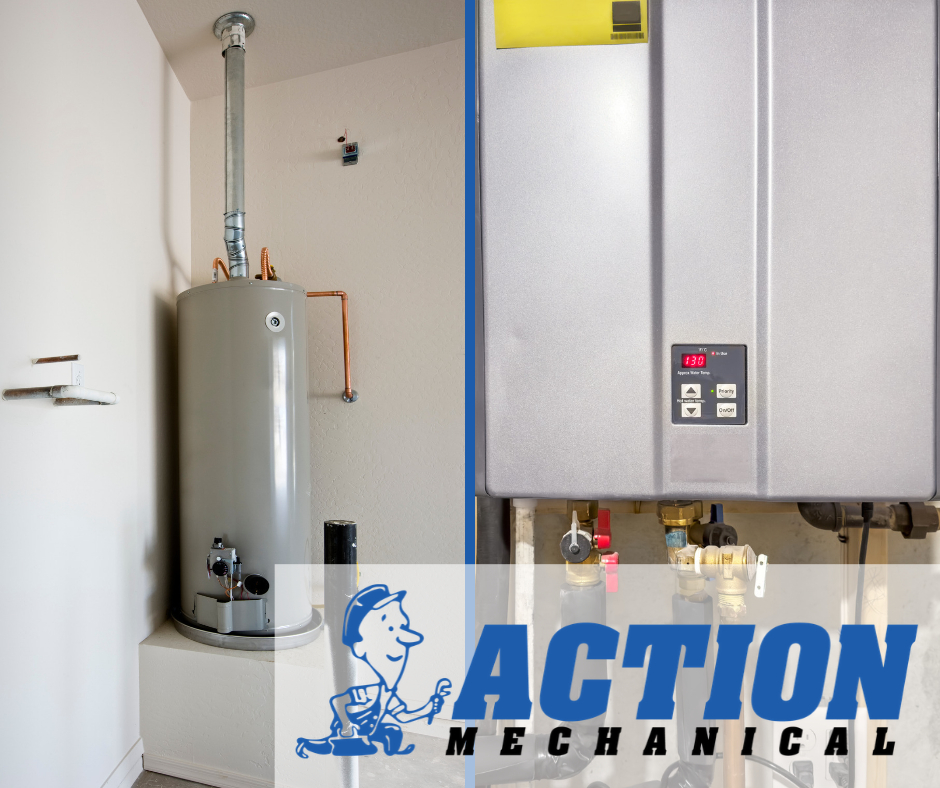
Choosing between tank water heaters and tankless water heaters is really a decision about comfort, household habits, installation conditions, and return on investment. A tank model usually wins on lower upfront water heater cost, while a tankless model often wins on operating efficiency and long-term energy savings. For homeowners actively comparing energy-efficient water heaters in the Rapid City/ Black Hills area, the best choice is the one that matches your home’s hot water demand, utility setup, and how long you plan to stay.
Which Option Saves More Money Over Time?
Tankless water heaters usually save more on energy use, but tank water heaters are often more cost-effective upfront. The Department of Energy reports that demand-style water heaters can be 24% to 34% more energy efficient than conventional storage tank water heaters in homes using 41 gallons or less of hot water per day, and 8% to 14% more efficient in homes using about 86 gallons per day. That means tankless can provide better operating ROI when the installation is straightforward and the homeowner stays in the home long enough to recover the higher initial cost.
The practical answer is this: if you need the lowest replacement cost today, a tank water heater is usually the easier financial choice. If your goal is lower utility waste over several years, and your gas line, venting, electrical, and plumbing layout can support it without major upgrades, tankless may save more money over the life of the system.
The Basic Difference Between Tank and Tankless Systems

A tank water heater stores hot water in a reservoir, commonly sized to serve the expected needs of the home. It keeps that water hot throughout the day, even when no one is using it. This design is familiar, reliable, and generally simpler to replace when the new unit is similar to the old one.
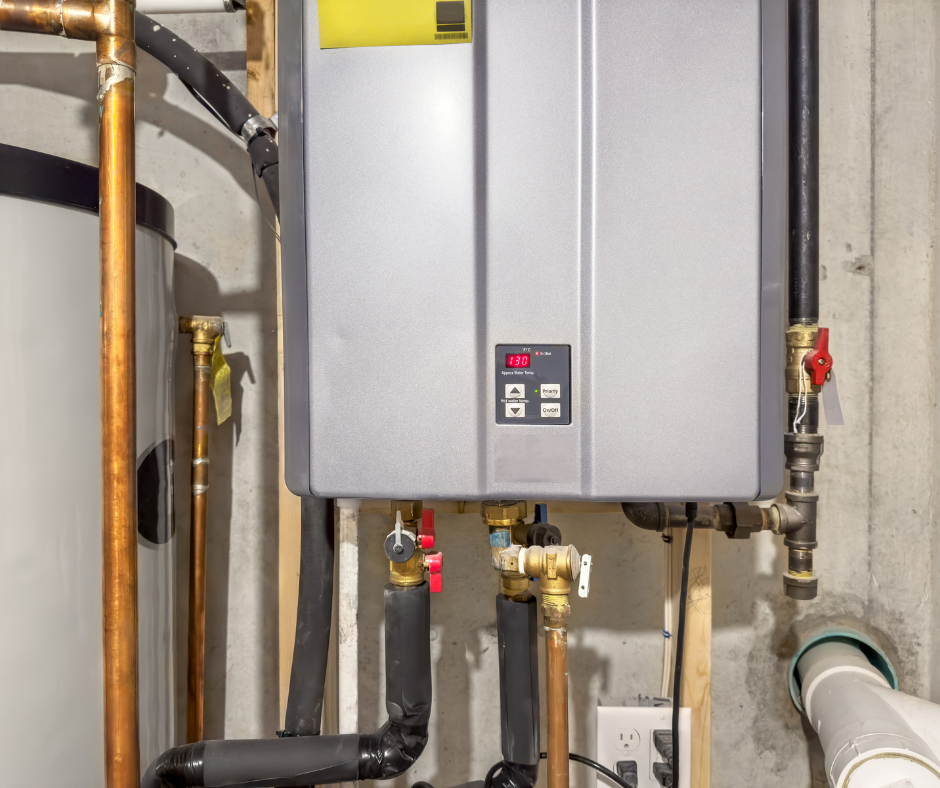
A tankless water heater heats water only when a fixture calls for it. When you turn on a shower, sink, or appliance, water passes through a heat exchanger and is warmed on demand. Because the system is not maintaining a full tank of hot water all day, it reduces standby heat loss. DOE’s Building America research notes that tankless units can deliver large quantities of hot water at a relatively consistent temperature without the standby loss associated with storage tanks.
At the heart of it all, tanks offer simplicity and stored capacity; tankless systems offer on-demand efficiency and a compact footprint.
ROI Factors That Matter Most
A good ROI comparison should not stop at the purchase price. Water heating affects monthly utility bills, installation labor, maintenance needs, comfort, and future replacement timing. For a new homeowner, the most useful question is not “Which unit is best?” but “Which unit pays me back in this house?”
Key ROI factors include:
For ROI, the most cost-effective product is not always the one with the lowest energy use. A tankless unit may save energy, but if the installation requires major venting, gas line, or panel work, the payback period can stretch. A tank model may use more energy, but if it is a like-for-like replacement with modest installation needs, its total cost can remain lower for many households.A good ROI comparison should not stop at the purchase price. Water heating affects monthly utility bills, installation labor, maintenance needs, comfort, and future replacement timing. For a new homeowner, the most useful question is not “Which unit is best?” but “Which unit pays me back in this house?”
When a Tank Water Heater Makes Financial Sense
Tank water heaters remain a strong choice because they are simple, familiar, and often less expensive to install. If your current tank location, venting, drain pan, water lines, and fuel source are already suitable, replacement can be more direct than changing system types. That matters when a water heater fails unexpectedly and the household needs hot water restored quickly.
A tank unit may be the better ROI choice when:
- You plan to sell the home within a few years.
- You want the lowest upfront Water heater cost.
- Your household has moderate hot water use and predictable routines.
- Your existing tank installation is safe, code-compliant, and easy to replace.
- Your home would need costly utility upgrades for tankless.
The main tradeoff is standby energy use. Even well-insulated tank water heaters lose some heat while storing hot water. If your household uses hot water throughout the day, this loss may feel less important. If the house sits empty for long periods, standby loss becomes a bigger part of the operating cost.
When Tankless Water Heaters Offer Stronger ROI
Tankless water heaters can make excellent financial sense in the right home. They are especially appealing when the homeowner values efficiency, has limited mechanical-room space, and expects to stay in the home long enough to benefit from lower operating costs. When compared to tank water heaters, the tankless system is often the better long-term savings option when installation requirements are reasonable.
Tankless may be the stronger choice when:
- You have lower to moderate daily hot water use. DOE’s higher efficiency range applies to homes using 41 gallons or less per day, which improves savings potential.
- Your current utilities can support the system. Gas tankless units may need proper gas capacity and venting; electric models may need significant electrical capacity.
- You want to reduce wasted energy. Heating only on demand helps limit standby loss.
- You need more usable space. Wall-mounted equipment can free up floor area.
- You are planning other home efficiency upgrades. Coordinating plumbing, heating, ventilation, and comfort improvements can reduce disruption.
For Rapid City homeowners, cold incoming water temperature can also affect tankless sizing. The colder the incoming water, the harder the unit must work to deliver the same shower temperature. This does not make tankless a poor choice, but it does mean proper sizing matters. A professional should calculate expected flow rate, temperature rise, and fixture demand before recommending a model.
How Does Comfort Compare During Daily Use?
Tank systems and tankless systems can both provide comfortable hot water, but they feel different in daily use. A tank unit offers a ready supply of stored hot water, yet it can run out if several showers, laundry loads, or dishwasher cycles happen close together. A tankless unit can keep heating water as long as demand stays within its capacity, but flow rate and temperature rise must be matched to real household use.
This is where many homeowners misunderstand the difference between tankless versus tank water heaters. Tankless does not mean unlimited hot water for every fixture at once. It means continuous hot water within the unit’s designed flow range. A properly sized tankless system may handle normal household use very well, while an undersized system may struggle when multiple fixtures run at the same time.
For technicians explaining the difference to customers, a clear comparison helps: a tank is like having a full pitcher ready; tankless is like having a faucet that can keep filling, as long as you do not ask for more flow than it can produce.
Installation Conditions Can Change the Real Cost

Installation is the point where ROI can shift quickly. A basic tank replacement may be relatively straightforward when the new system matches the existing type. A tankless conversion may involve new venting, condensate handling for high-efficiency gas equipment, gas line evaluation, electrical work, water line adjustments, or code updates.
That does not mean tankless is too expensive. It means the estimate should be complete. A low equipment price is not a true cost comparison if it leaves out the work needed to make the system safe, efficient, and reliable.
Use this checklist before deciding:
🗸 Is the current water heater gas or electric?
🗸 Is the existing venting suitable for the new equipment?
🗸 Does the gas line or electrical panel have enough capacity?
🗸 How many fixtures may need hot water at the same time?
🗸 How long do you expect to stay in the home?
🗸 Are you mainly solving a comfort problem, an energy problem, or an emergency replacement?
🗸 Would maintenance access be easy in the proposed location?
When in doubt, contact our team of HVAC pros! Action Mechanical provides plumbing, heating, and cooling system installation and maintenance, and our residential services include heating, plumbing, drain cleaning, humidifiers, mini-splits, and air ionizer services. We specialize in radiant heating, thermostat installation, sheet metal and ductwork, preventative maintenance, and emergency service support in the Rapid City and Black Hills area.
Energy Efficiency and Indoor Comfort Work Together
Water heating is not separate from overall home comfort. A safe, efficient mechanical system supports stable routines, lower waste, and better peace of mind. For a new homeowner, the water heater should be reviewed alongside the furnace, boiler, thermostat, ventilation, humidity control, and plumbing system.
That whole-home view is especially useful in climates where heating performance matters for much of the year. If your home already needs furnace repair, boiler maintenance, ductwork adjustments, or thermostat updates, it may be smart to discuss the water heater at the same appointment. Coordinating work can help you make practical decisions instead of reacting to one failure at a time.
Preventative maintenance also protects ROI. Sediment, poor venting, neglected valves, incorrect temperature settings, or improper sizing can reduce comfort and shorten equipment life. Whether you choose tank or tankless, the system should be installed correctly, maintained regularly, and checked when performance changes.
The Best Choice for Most Homeowners
For most homeowners, the decision comes down to this summary:
- Choose a tank water heater if your priority is lower upfront cost, fast replacement, and simple installation.
- Choose a tankless water heater if your priority is long-term energy savings, compact equipment, and on-demand performance.
- Choose based on ROI, not trends. The better option is the one with the strongest balance of installation cost, expected savings, comfort, and length of ownership.
If all installation conditions are favorable, tankless water heaters typically offer the stronger long-term savings because they reduce standby energy loss and can be significantly more efficient in lower-use households. If the home requires expensive upgrades to support tankless, a high-quality tank model may be the more cost-effective choice.
Need Expert Advice? Action Is Here!

If you are comparing energy efficient water heaters and researching solutions in the Rapid City and Black Hills region, contact Action Mechanical to request service or call 605-348-5212.
Our team can help evaluate your home’s plumbing and comfort needs so you can make a clear, practical decision. #TakeAction
Last Modified:
