
HVAC Tips for Pet Owners with Allergies: Practical Ways to Improve Indoor Air
– By #Action Mechanical
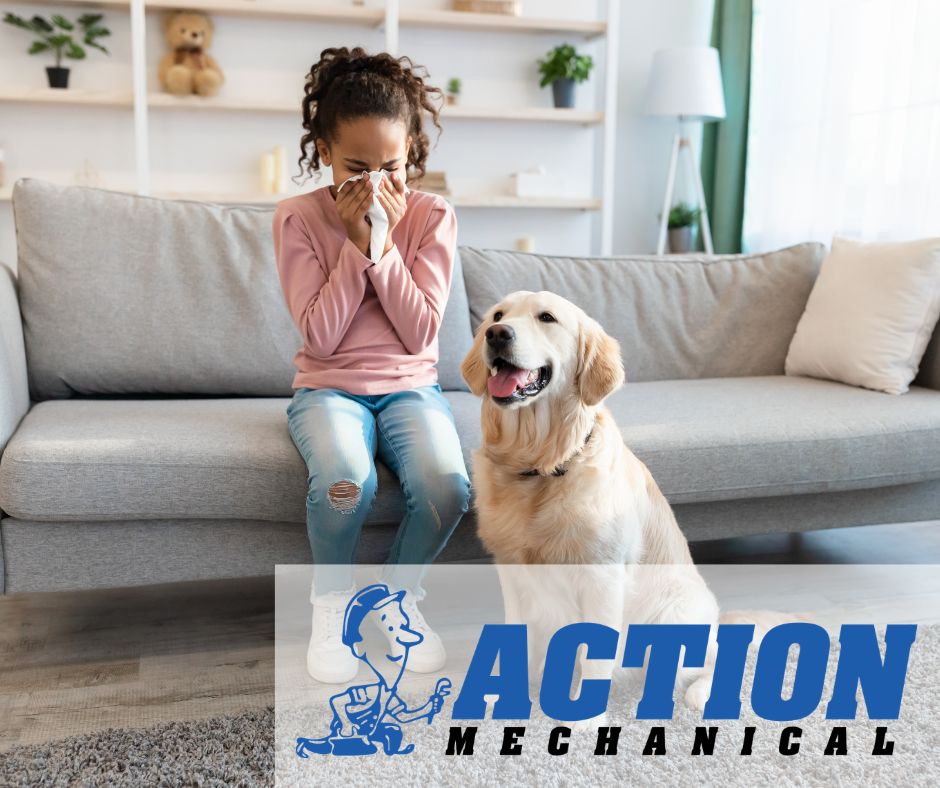
Allergy season brings extra challenges when you share your home with cats or dogs. Pet dander, hair, and saliva can cling to fabrics, settle in ducts, and recirculate as indoor allergens. With a clear plan, you can reduce pet dander, cut home allergens, and maintain steady comfort. This guide delivers HVAC tips for pet owners with allergies, explains how to get rid of allergens in the home, and shows the indoor air quality upgrades that make a difference. If you’re seeking a trusted partner, Action Mechanical provides expert advice, professional maintenance, and tailored solutions for lasting relief from indoor allergies.
Why Pet Allergens Linger and How HVAC Helps
Most pet-related reactions come from proteins found in dander, saliva, and urine. These fine particles ride airflow, collect in carpeting and upholstery, and may settle inside ductwork. Without strong filtration and ventilation, indoor allergens remain suspended and easy to inhale.
Common symptoms include sneezing, congestion, itchy or watery eyes, coughing, and skin irritation. For anyone with asthma or chronic respiratory issues, flare-ups can affect sleep and day-to-day comfort. The right HVAC process starts with filtration, ventilation, and humidity control working together to lower airborne loads and keep fresh air moving.
Maintenance Steps That Support Allergy Relief
Routine care helps your system capture and contain home allergens rather than recirculate them. Use these steps to reduce pet dander and keep airflow steady.
- Choose effective filters: Pleated filters in the MERV 11–13 range offer strong capture of fine particles while maintaining airflow. For sensitive households, a high-efficiency media cabinet or properly designed HEPA bypass can add another layer of protection against indoor allergens.
- Replace filters on a schedule: Check monthly and replace every 60–90 days. During heavy shedding or with multiple pets, monthly swaps maintain performance. Consistent filter changes are a foundational answer to how to get rid of allergens in the home.
- Keep components clean: Wipe supply and return grilles, clear debris near the outdoor unit, and make sure vents aren’t blocked by furniture or pet beds. Schedule professional tune-ups in spring and fall to verify airflow, clean coils, and identify duct leaks that can pull dust into circulation.
These practices limit indoor allergies by helping your equipment move air efficiently and trap fine particles before they spread.
Targeted Indoor Air Quality Upgrades
Strategic improvements deliver measurable relief and are central to pet owners with allergies. Consider the options below to tackle indoor allergens and odors together.
- Air purifiers: Whole-home units or high-quality portable purifiers with true HEPA capture particles down to 0.3 microns, including dander and fine dust. Activated carbon helps manage pet odors. When used correctly, UV-C lights or ionizers can supplement biological contaminant control.
- Humidity management: Aim for 40%–50% relative humidity. Balanced moisture reduces dust mite activity and discourages mold. Whole-home dehumidifiers offer consistent control, while portable units can target basements or closed rooms.
- Ventilation upgrades: Kitchen and bath exhaust fans remove moisture and pollutants at the source. Balanced systems like ERVs and HRVs deliver filtered outdoor air while preserving comfort. Keep interior doors open to support even circulation. On high pollen days, rely on mechanical ventilation to limit new indoor allergens.
Combining filtration, purification, ventilation, and humidity control is a proven approach to how to get rid of allergens in the home and reduce pet dander without compromising comfort.
Cleaning Habits That Complement Your System
Smart cleaning routines work alongside HVAC to cut home allergens and keep indoor allergens from building up.
- Vacuum thoroughly: Use a sealed vacuum with HEPA filtration on carpets, rugs, and upholstery at least twice per week. This prevents fine dust and dander from re-entering the air.
- Dust with microfiber: Microfiber traps particles instead of spreading them. Focus on baseboards, blinds, and pet lounging zones where indoor allergens accumulate.
- Launder textiles routinely: Wash pet bedding, throws, and washable covers weekly in hot water to reduce pet dander and hair.
- Choose gentle products: Use pet-safe, low-fragrance cleaners. Enzyme-based solutions help with accidents, and mild cleaners reduce irritants that can worsen indoor allergies.
Homeowners often ask, does cleaning air ducts help allergies? If you notice persistent dust or reduced airflow, especially after renovations or long periods without service, professional duct cleaning may help. It’s not required on a fixed schedule, but an inspection every few years can reveal whether accumulated hair and debris are contributing to home allergens. Pair any duct work with a system tune-up for best results. Addressing duct cleanliness is one piece of the larger plan for how to get rid of allergens in the home.
Action Mechanical: Your Partner for Cleaner Air and Fewer Allergens
If you love your four-legged friend but hate allergies, Action Mechanical offers clear guidance and reliable service. We install high-efficiency filters, media cabinets, and whole-home air purifiers, and we provide UV and ionization options where they fit your system and goals. Our technicians perform thorough tune-ups, measure static pressure, and verify duct integrity to keep filtration effective and airflow consistent.
We can assess your ductwork, recommend practical steps, and coordinate any cleaning with performance improvements. From humidity control to ERV/HRV ventilation, we design solutions that address indoor allergens and support comfort across every season. For homeowners asking how to get rid of allergens in the home, our team delivers targeted upgrades and maintenance that make a noticeable difference.
Choose a trusted leader focused on results. Contact Action Mechanical to schedule an indoor air quality assessment, discuss HVAC tips, and map out a plan to reduce home allergens. Breathe easier, enjoy life with your pets, and keep indoor allergies in check with solutions tailored to your home.
Last Modified: